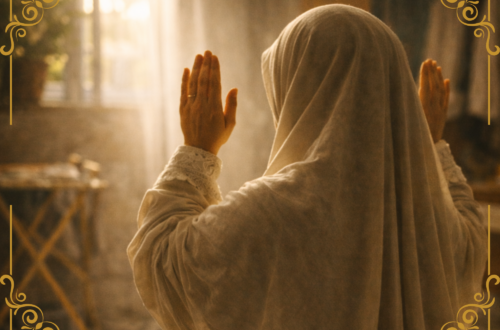
The Lockdown Chronicles (Part 1): “Shollu Fi Rihalikum” and the Great Egg Hunt
In late 2019, as whispers of a strange new virus started making the news, I was busy doing something I had waited years to do: I was relearning how to drive in Saudi Arabia.
By December, I had passed my test. By early January 2020, I was holding my official driver’s license. I felt a surge of freedom. The open roads of Riyadh were finally mine.
And then, just a few weeks later, the entire world stopped. Lockdown.
My brand new driver’s license stayed tucked in my wallet, useless. Malls closed. Parks closed. The roads I was so excited to drive on were suddenly empty, heavily guarded by police checkpoints. We were completely confined to our home.
The Chilling Call to Prayer
The reality of what was happening didn’t fully hit me until the first time I heard the Adhan (call to prayer) change.
For my entire life, the muezzin had called out Hayya ‘ala-s-salah (Come to prayer). But suddenly, echoing through the unnervingly quiet streets of Riyadh, the words changed.
Shollu fi rihalikum. (Pray in your dwellings.)
I remember the chill that ran down my spine. People were praying at home. The mosques were empty. It felt apocalyptic, like the earth had shifted on its axis and we were all just holding our breath inside our houses, waiting to see what would happen.
The WFH Friction and the Indoor Playground
While the world outside was eerily quiet, the world inside my house was deafening.
I was managing eight children who suddenly had nowhere to go. My husband transitioned to working from home, which sounded like a blessing until reality set in. When he used to go to the office, he didn’t hear the constant, buzzing hum of the kids all day. I used to be able to call a part-time maid to help me clean and organize.
But with the lockdown, that was out the window. My husband expected the house to be as quiet and clean as an office, completely underestimating the sheer impossibility of keeping eight locked-up children silent. There were many disputes during those early weeks. He thought I just couldn’t “control” the house. He didn’t understand that the house wasn’t out of control; it was just alive, and it had nowhere else to release its energy.
To keep the peace—and my own sanity—we sacrificed an entire room and turned it into an indoor survival zone. We brought the park inside, setting up two plastic playhouses and a small slide right there on the floor. Books and toys were scattered everywhere, and we had a TV hooked up to a DVD player. It wasn’t on all day, but it was on a lot—a necessary, colorful distraction to give me a few minutes to breathe when the noise reached its absolute peak.
The Heavy Geography of Worry
Beneath the daily chaos of rationing eggs and breaking up toddler fights, there was a quiet, heavy hum of anxiety. The pandemic wasn’t just happening outside our front door in Saudi Arabia. It was everywhere.
My heart was stretched across the globe. I spent quiet moments obsessively checking the news, terrified for our relatives back in Indonesia and the USA. When you live an ocean away from your family, distance is always hard. But during a global lockdown, when airports shut down and borders closed, that distance felt like a locked door. I was trying so hard to shield my eight children from the panic of the outside world, while silently carrying the terror of it for my loved ones far away.
The Great Egg Hunt
Then there was the logistics of simply keeping everyone fed. When you have a family of ten, you don’t buy groceries; you manage a supply chain.
When the panic buying started, stores began limiting customers. We needed about four trays of eggs (120 eggs!) every single week just to feed the kids breakfast and bake enough to keep them happy. But the supermarkets restricted customers to only two trays of 30 eggs per visit.
I remember running around, trying to figure out how to feed my tribe. Our greatest victory was finally securing our 120 eggs from Manuel Supermarket when they were sold out everywhere else. It sounds silly now, but in the middle of a global panic, walking out with those eggs felt like a massive triumph.
Finding the Barakah in the Bubble
Despite the chaos, the friction, and the fear, we survived. We adapted.
We ordered everything online, relying on the brave delivery drivers from HungerStation, Noon, and Amazon. We prayed Tarawih together at home in one of the bedrooms. For Eid, we dressed up, cooked a beautiful meal, and prayed in the courtyard just to feel the sun on our faces and pretend we were outside.
By the time the lockdown slowly began to ease in the summer, I was heavily pregnant with my 9th child. We thought the hardest part of the pandemic was behind us.
We had no idea that the real chaos—six online school computers and an unplanned home birth—was just around the corner.
💬 A Thought for You What is your most vivid memory of the early lockdown days? Was it a shortage at the grocery store, a canceled plan, or the sudden quiet? Let’s share those memories in the comments.


You May Also Like
Nobody Claps for the Mother Who Remembered Everything
The Road to Makkah, My First Umrah and the Hijab in the Mataf