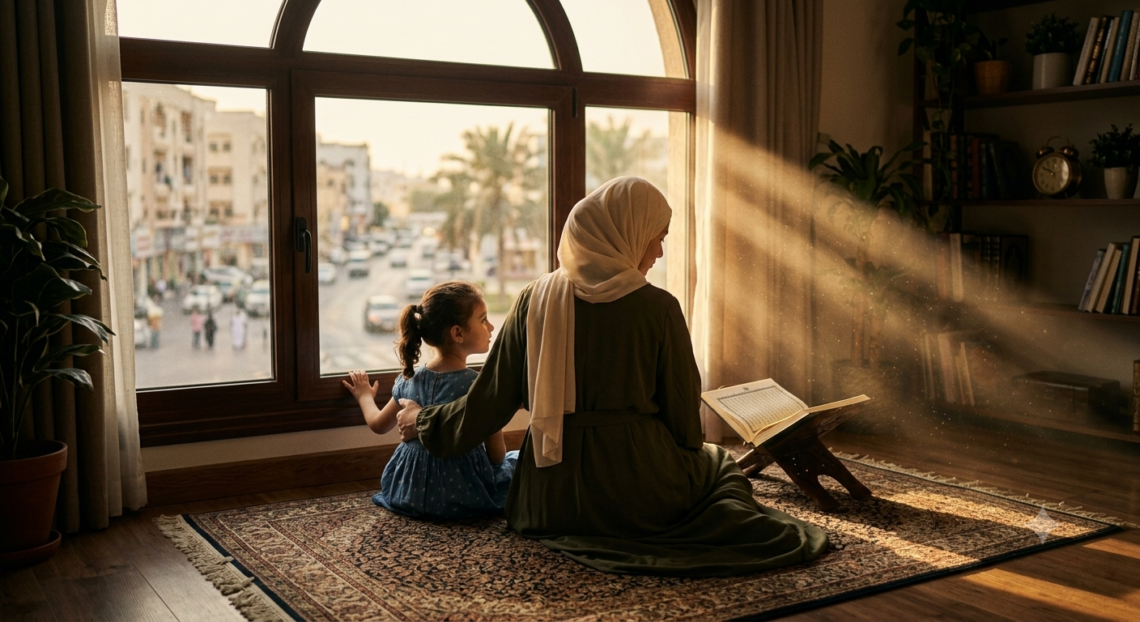
When Ordinary Stopped Looking Ordinary
For most of my childhood, cigarettes were simply part of the scenery. They were everywhere—family gatherings, restaurants, bus stops, university campuses. Someone was almost always smoking, and everyone else was breathing the smoke. That was simply how life looked.
I didn’t like cigarettes. I hated the smell, and as a child I had a rather creative solution to the problem. I thought someone should invent a smoker’s helmet—a fully enclosed helmet that kept every puff of smoke inside so the smoker could enjoy it while the rest of us enjoyed fresh air.
I was quite convinced it was a brilliant invention.
Sadly, no one seemed interested in investing.
But if you had asked me back then whether smoking was haram (prohibited), I honestly wouldn’t have known what to say. I never really thought about it. It was simply… normal.
When Something Ordinary Became Different
During my final year at university, something quietly changed.
I began studying Islam more seriously—not just learning what to do, but learning why.
Around that time, I began reading the evidences and scholarly discussions regarding smoking. The scholars I was learning from concluded that smoking is prohibited, and as I understood their reasoning, my perspective slowly began to change.
I still remember how surprised I was. Not because I thought smoking was good—I had always disliked it—but because I had never once connected it to my religion.
Suddenly, something that had always lived in the background of my life moved into the foreground.
I started seeing cigarettes differently. They no longer represented only an unpleasant smell or an unhealthy habit. They became a reminder that our bodies are an amānah—a trust from Allah—and that caring for them is part of our worship.
The cigarette hadn’t changed. The smoke hadn’t changed. The world hadn’t changed.
Only my eyes had.
The Quiet Miracle of Knowledge
Looking back, I think that is one of the quiet miracles of beneficial knowledge.
Knowledge doesn’t always change the world around us. Sometimes it changes the world inside us.
Things we barely noticed before suddenly become impossible to ignore—not because they changed, but because we did.
That experience has stayed with me for many years. It reminds me to be careful before saying, “It’s just normal.”
Normal according to whom?
Culture changes. Societies change. What one generation accepts without a second thought, another generation may look back on with complete disbelief.
As Muslims, our compass is not whatever happens to be common around us. Our compass is revelation.
Sometimes revelation agrees with culture. Sometimes it gently corrects it. And sometimes it asks us to become comfortable being different.
Raising a Different Compass
That realization has quietly shaped the way I hope to raise my own children.
I know they will grow up surrounded by things that everyone else considers ordinary. Some of those things will be harmless. Some won’t.
My prayer is not that they simply copy what I tell them. It is that they grow to love Allah enough to ask,
“What pleases Him?”
before they ask,
“What is everyone else doing?”
Because one day they, too, will encounter a piece of knowledge that changes the way they see the world.
Perhaps it will not be about cigarettes. Perhaps it will be about money, entertainment, friendships, modesty, honesty, or something I cannot even imagine today.
I hope that when that day comes, they will have the humility to let truth reshape them, even if it means standing apart from what everyone else calls normal.
Seeing with New Eyes
Looking back, I no longer remember the first time I smelled cigarette smoke.
But I remember the season when it stopped looking ordinary.
That experience taught me something much bigger than the ruling on smoking.
It taught me that guidance often begins with seeing.
The world remains exactly where it was. The same streets. The same conversations. The same habits.
Yet, through the light of beneficial knowledge, Allah allows us to see them differently.
Perhaps that is one of His greatest gifts—not merely teaching us new information, but teaching us to look at the world through the lens of revelation rather than habit.
The world did not change.
By Allah’s mercy, I did.

You May Also Like
Laughter, Lunch, and the Last Hour of Jumu’ah
Birth and The Raw Truth of Surrender