Hijabi’s Path to Jane Austen’s Longbourn
It might seem like a stretch.
What does a 19th-century Englishwoman—preoccupied with balls, bonnets, and social standing—have to do with a 21st-century Muslim mother of ten in the UAE? On the surface, our worlds are oceans apart. But when I open a well-worn copy of Pride and Prejudice, I don’t feel like I’m reading about a stranger. I feel like I’m looking into a mirror.
The Path Through the Woods
I’ll admit, my love for Austen didn’t start with the dense, original prose. English is not my first language, and the intricate, looping sentences of the 1800s were a challenge to grasp.
I took the scenic route.
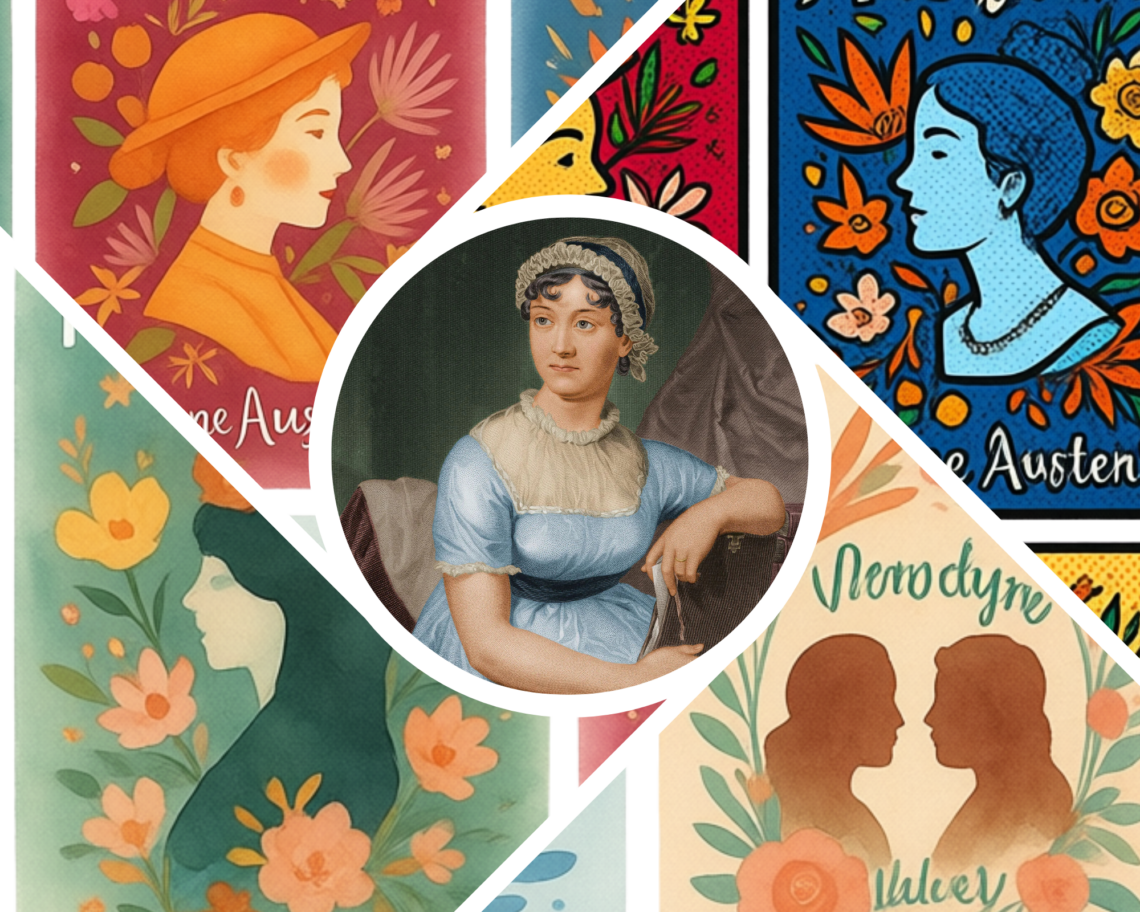
I started with abridged, illustrated versions. Then came the Keira Knightley film—a visual map that finally made the social cues and the wit click into place. From there, I went back to the original text. I even branched out into the “fanfic” retellings: the gritty downstairs perspective of Longbourn, the absurdity of Pride and Prejudice and Zombies, and the mystery of Death Comes to Pemberley.
I used these “bridges” to find a way in, layer by layer, until the world of Austen felt like home.
The Hidden Work of a “Full” Mind
We often imagine Austen’s world as slow and leisurely. But as a mother managing a household of twelve, I see something different. I see the original “Command Control.”
When I look at Mrs. Bennet, I no longer just see an annoying, hysterical woman. I see a mother whose “forty-tab” brain is running at high speed. She is calculating dowries, social standing, and the sheer logistics of survival for her five daughters in a world that gives them no safety net. Her “nerves” aren’t just a plot device; they are the physical manifestation of the mental load. She is a “Builder” without a hammer, trying to build her children’s futures out of gossip and sheer willpower.
Then there is Emma Woodhouse. Her inner dialogue is exhausting because she is constantly “project managing” everyone else’s lives. She’s storyboarding matches, optimizing relationships, and calculating outcomes. For a mother who manages a huge family, that “Emma energy” is familiar—the feeling that if you just move this person here and solve that problem there, the whole system will run perfectly. Her mind is never still because her heart is constantly “at work.”
And I think of Mrs. Croft from Persuasion. While her husband, the Admiral, is busy “working” at the helm of a ship, her mind is right there with him. She isn’t just a passenger; she understands the wind, the map, and the horizon. She is the steady hand, the woman who has found a way to be a “Me” while being a “Partner.”
The Art of the Unspoken
In Austen’s world, as in many traditional Muslim homes, there is a profound language to what is not said. There are things understood without being announced. Reputation, presence, and timing… they matter.
As a hijabi, I understand the weight of being seen before being known. I know that the way I walk into a room already says something—before I speak. Over time, I’ve come to see modesty not just as a dress code, but as a kind of quiet intelligence. It is a way of moving through the world with awareness: knowing what to reveal, and what to protect.
The Strength of the Interior
What I love most about Austen’s heroines—especially Elizabeth Bennet and Anne Elliot—is that their strength is internal. They don’t always control the world around them. But they have clarity. They have wit. They have the ability to observe.
As a Muslim woman, that resonates. So much of our strength is found in our internal response. It’s in how we think, how we stay grounded when things around us feel messy, and how we preserve the “me” that exists beyond being “Mama.” It is the part of the soul that observes, reflects, and quietly makes sense of the world.
The Sacred in the Ordinary
Jane Austen didn’t write about grand wars. She wrote about families. Conversations. Ordinary days that slowly shaped a life.
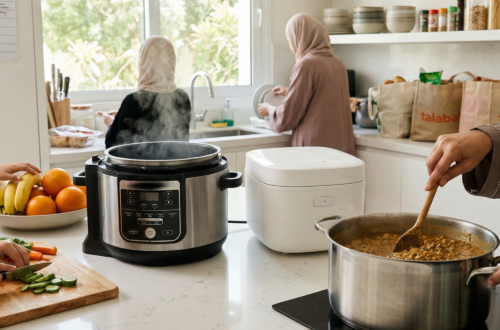
That is what draws me in. Because that is where I live. Not in big, dramatic moments—but in the kitchen. In the noise. In the rhythm of a full house. This is the heart of Barakah Roots: to find meaning in what looks ordinary.
Being a hijabi and reading Jane Austen has never felt like a contradiction. It feels like holding two quiet worlds together. And somehow… they understand each other perfectly.
Who is your “Command Control” character?
Do you find yourself relating to the frantic planning of a Mrs. Bennet, the project-managing heart of an Emma, or the steady gaze of a Mrs. Croft? I’d love to hear which literary “manager” speaks to your soul.


You May Also Like

The Lockdown Chronicles (Part 2): Six Computers and a Car Ride

My TV Memory Lane, from Oshin to Si Komo