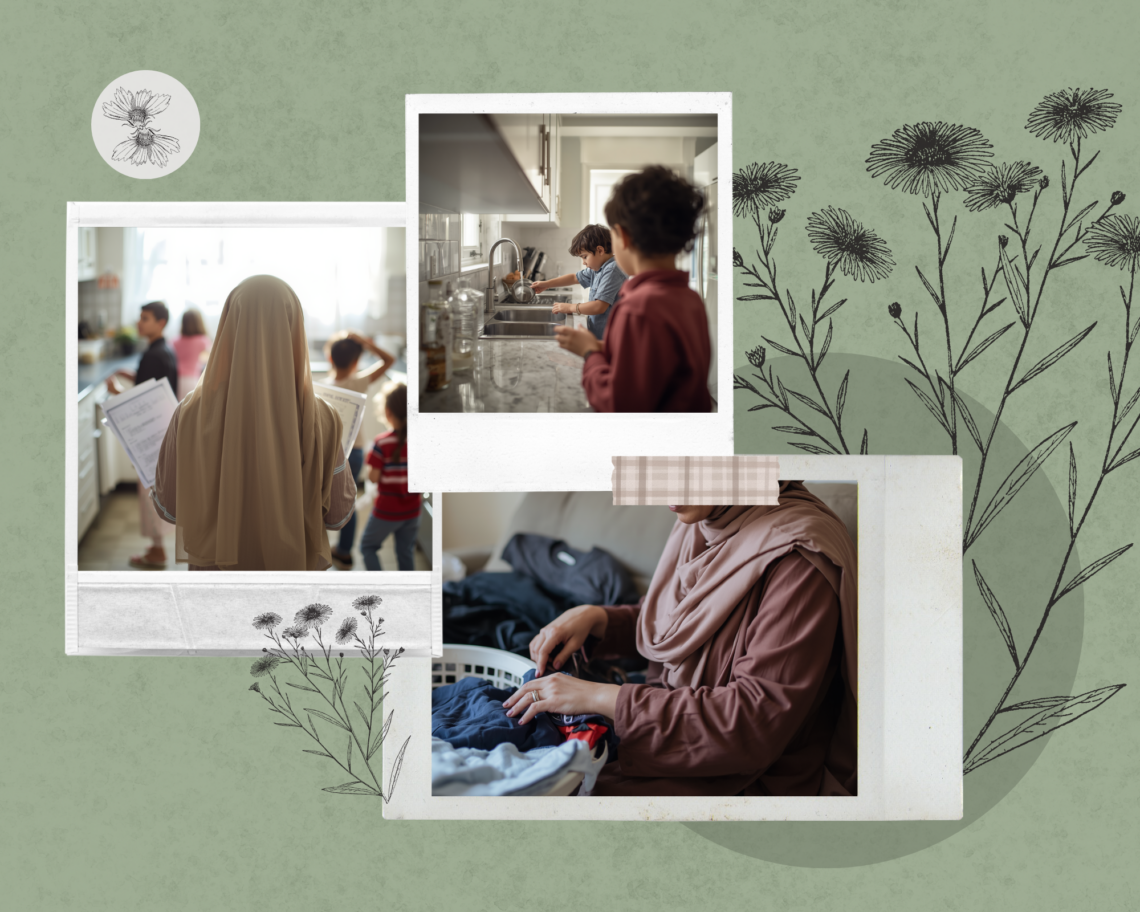
Nobody Claps for the Mother Who Remembered Everything
Nobody claps for the mother who remembered everything. Usually, they only notice the one thing she forgot.
It’s the child suddenly announcing at 9 PM that they need green cardboard for school tomorrow. It’s the “Mama, did you sign this?” paper appearing exactly when everyone is already wearing shoes. But beneath those frantic moments is a vast, silent ocean of things that did happen because you remembered them: the favorite snack you bought, the way everyone’s different food preferences live permanently inside your brain, and the small emotional tensions you noticed before they ever became arguments.
I don’t think most families do this maliciously. Invisible labor becomes invisible precisely because it is done so consistently. People get used to things simply working. The uniforms appear. The groceries exist. The children arrive at school carrying what they need, and dinner appears almost every day. From the outside, the household starts looking effortless.
But many mothers are quietly carrying entire households inside their heads. It isn’t humanly possible to perfectly track the needs, schedules, emotions, and friendships of a large family all the time. Realistically, I don’t even try to be that kind of perfect mother anymore. I don’t track every assignment closely as long as I know they are generally okay. I just make sure they have the basics: stationery, food they will actually eat, and someone to come to when something matters. And alhamdulillah, they usually do come to me.
To be fair, the children help a lot, too. They unload groceries, wash dishes, watch younger siblings, and read those fast-moving Arabic school messages for me. This isn’t one exhausted mother doing everything alone; it is a family functioning together, imperfectly.
Yet, even in helpful families, the mother remains the default memory holder. You are the one mentally carrying what is running out, who needs new sandals, and what emotional atmosphere currently exists. Sometimes motherhood feels less like “doing tasks” and more like keeping twenty invisible tabs permanently open in your brain. Even while resting, part of your brain is running in the background: Do we have enough rice? Did somebody mention a school project? Do we still have detergent?
It is exhausting in an unglamorous, administrative way. This is why many mothers become so emotionally attached to notebooks, containers, and reminder apps. We aren’t obsessed with organization; we are trying to create external systems for an internal overload. Sometimes a labeled basket is less about decor and more about psychological survival.
The loneliest part of invisible labor is that success looks like nothing happening. Nobody notices the crisis you prevented or the meltdown you softened. But I believe Allah sees this labor differently than the world does. He sees the mother waking up before everyone else. He sees the endless repetition, the meals, and the emotional restraint it took not to yell when you were overstimulated.
The Prophet ﷺ taught us that even placing food into your spouse’s mouth is an act of reward. How much more, then, for the person remembering, organizing, comforting, and carrying a family day after day?
Maybe some acts of care are meant to be written quietly. And maybe the mother who remembered almost everything deserves gentleness, too, when she forgets one thing.
If you are carrying a hundred invisible tabs today, know that Allah sees the things nobody else notices.
I would love to hear: what is one tiny, invisible thing you do for your family that people rarely realize takes effort?


You May Also Like

The Unglamorous Truth of Going Back to Fitness

The Books That Built Me